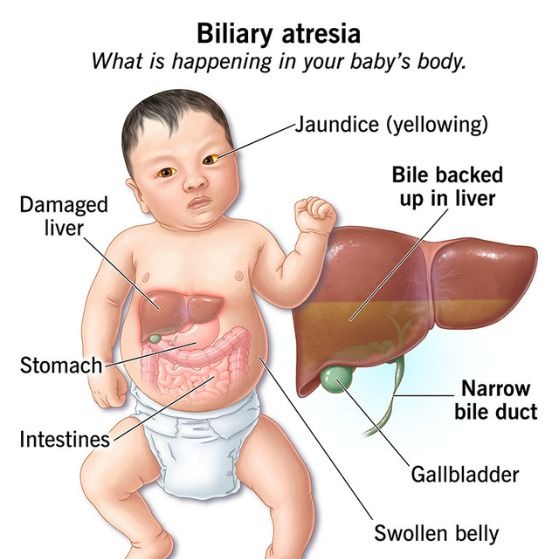
رتق القناة الصفراوية is a life-threatening liver disease in infants where the bile ducts inside or outside the liver become inflamed, narrow, or completely blocked. This prevents bile (a digestive fluid) from draining into the gallbladder and small intestine, causing bile to back up and damage liver cells. Parents seeking specialized biliary atresia treatment in Delhi should consult an experienced pediatric surgeon immediately to prevent irreversible liver scarring and liver failure.
لا يزال السبب الدقيق للركود الصفراوي قيد التحقيق، ولكن الأبحاث تشير إلى عدة محفزات محتملة:
تظهر الأعراض عادة بين أسبوعين وثمانية أسابيع بعد الولادة:
الوقت جوهري عند علاج رتق القنوات الصفراوية. إذا تم إجراء إجراء كاساي في غضون أول 60 يومًا من الحياة، فإن معدل نجاح إنشاء تدفق الصفراء يكون أعلى بكثير. الجراحة المتأخرة تزيد من خطر تليف الكبد الذي لا رجعة فيه، مما يجعل زراعة الكبد الخيار الوحيد المتاح. الفحص المبكر والرعاية الجراحية الفورية ضروريان للحفاظ على الكبد الأصلي للرضيع.
يمتد اهتمامنا إلى ما بعد غرفة العمليات. نقدم دعمًا غذائيًا متخصصًا، حيث غالبًا ما يعاني الرضع المصابون بالركود الصفراوي من صعوبة في امتصاص الدهون والفيتامينات الأساسية. يضمن المراقبة المستمرة من قبل فريق أمراض الكبد للأطفال لدينا أن أي علامات لالتهاب الأقنية الصفراوية أو ارتفاع ضغط الوريد البابي تتم إدارتها على الفور، مما يوفر أفضل جودة حياة ممكنة لطفلك.
تحويلة جراحية تربط حلقة من الأمعاء الدقيقة مباشرة بالكبد لاستعادة تصريف الصفراء.
تركيبات متخصصة ومكملات فيتامينات لدعم النمو والتطور على الرغم من ضعف تدفق الصفراء.
تقييم مستمر والاستعداد لزرع كبد محتمل إذا كان إجراء كاساي غير كافٍ.
تشمل اختبارات الدم، الموجات فوق الصوتية للكبد، وغالباً مسح HIDA أو خزعة الكبد لتأكيد التشخيص واستبعاد الأسباب الأخرى لليرقان.
يتم إجراؤها تحت التخدير العام، حيث يتم تجاوز القنوات الصفراوية التالفة باستخدام أمعاء الرضيع لاستعادة تدفق الصفراء.
يركز على التغذية ومنع العدوى (التهاب الأقنية الصفراوية). المراقبة طويلة الأجل لوظائف الكبد ضرورية لتحقيق نتيجة صحية.
"Dr. Chowdhary's expertise in Biliary Atresia Surgery in Delhi was a miracle for our baby. He performed the Kasai procedure promptly, and today our son is healthy and thriving."
"كنا مرعوبين بشأن مثل هذه الجراحة الكبرى لطفل عمره شهرين. نهج الدكتور سوجيت الهادئ والمهني منحنا الثقة التي نحتاجها."
"The best decision for our child's liver health. Finding the best doctor for Biliary Atresia Treatment in Delhi was our priority, and Dr. Chowdhary exceeded all our expectations."
"الدقة في جراحة حديثي الولادة للدكتور تشودري لا تصدق. ثقته منحتنا راحة بال هائلة خلال وقت عصيب للغاية."
"We traveled from another city to consult Dr. Chowdhary for Biliary Atresia Treatment in Delhi. His approach is very scientific, methodical, and deeply caring."
"فريق التمريض والدكتور سوجيت فريق رائع. لقد تعاملوا مع جراحة طفلنا بعناية ودفء كبيرين."
"أفضل قرار اتخذناه لصحة طفلنا. الدكتورة تشودري صبورة بشكل لا يصدق وشرحت كل شيء بشكل جيد للغاية."
When parents seek the best doctor for Biliary Atresia Treatment in Delhi, experience in complex neonatal hepatobiliary reconstruction is the most critical factor in achieving a successful outcome.
Biliary atresia is a rare, life-threatening liver condition in infants where the bile ducts outside or inside the liver become inflamed and blocked. This prevents bile from draining into the intestines to digest fats, leading to bile accumulation in the liver, jaundice, and progressive liver cirrhosis if not treated early.
The Kasai procedure is the primary surgical treatment for biliary atresia. During surgery, the damaged external bile ducts are removed, and a loop of the infant's small intestine is attached directly to the liver surface (portoenterostomy) to establish a new pathway for bile drainage.
Early surgical intervention is critical. The Kasai procedure yields the highest success rate when performed before 60 days (2 months) of age. Operating early prevents irreversible liver scarring and maximizes the chance of restoring normal bile flow.
Key warning signs in infants include persistent jaundice (yellowish skin and eyes) lasting beyond 2 weeks of life, pale clay-colored or white stools, dark tea-colored urine, and an enlarged, firm abdomen due to liver swelling.
A successful Kasai procedure can restore bile flow and preserve native liver function for many years, delaying or avoiding the need for a liver transplant. However, some children who develop progressive liver scarring over time may eventually require a liver transplant in later childhood.
Infants typically stay in the hospital for 7 to 10 days post-surgery. During this time, the surgical team monitors bile drainage, provides intravenous nutrition, manages post-op recovery, and starts special medications to encourage bile flow.
Long-term care involves daily fat-soluble vitamin supplements (A, D, E, K), high-calorie infant formulas, preventive antibiotic therapy to protect against bile duct infections (cholangitis), and regular follow-ups with a pediatric surgical specialist.
تعتبر جراحة كاساي المبكرة حاسمة لاستعادة تدفق الصفراء في حالة الركود الصفراوي. حدد موعدًا للاستشارة اليوم.
D6, Club, 2, مقابل فاسانت فيهار، فاسانت فيهار، نيودلهي، دلهي 110057
+91 98732 06761
